A strain or a complete tear to one of the quadriceps muscles can occur, often during activities such as sprinting, kicking, or jumping. 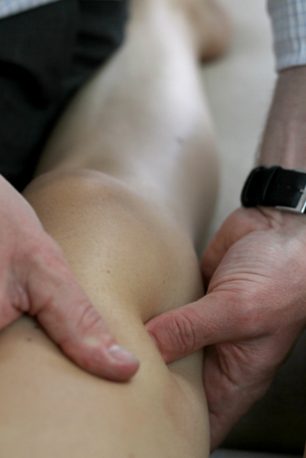 A history of sudden pain, or pain to stretch and contract are signs of a torn/strained muscle. Muscle strains/tears can be graded on a scale…
Grade 1 – no pain to stretch or contract. There is a general ache that is fatigue based or a delayed onset of muscular soreness issue. Rest and gentle stretching over a few days should ease this.
Grade 2 – no specific time of injury. There is tightness to stretch and to press but no contraction pain, suggesting there is increased tension in the muscle. This could be linked to pelvic/spinal issues or could be a local issue to the muscle on a small scale. Rest, gentle stretching, massage and an easy return to exercise should resolve this.
Grade 3a – Sharp pain at the time of injury followed by pain to stretch, variable pain to contract dependent on extent and tender spot to palpate. This needs to be rested for 5 days and treated with ice and anti-inflammatories. If in doubt and if the pain continues to be there after 5 days then seek help from your physio.
Grade 3b – This is the ‘sniper shot’. These are proper injuries with sharp pain on stretch and contraction, plenty of bleeding and swelling and you are unable to really use the leg. It needs to be rested to stop further damage, to reduce the amount of bleed and to allow healing. These are when you need to be assessed properly by a physio.
Should you experience pain during one or both of these, you can suspect a strain to the muscle. Recovery from a muscle strain can vary depending upon the severity of it…
There are a number of reasons for muscle strains/tears, not only locally in the injured muscles but also from the spine/pelvis areas…
- Poor warm up
- Muscle weakness
- Muscle tightness
- Muscle overload
All of these things can have an impact on the likelihood of straining a muscle, especially if you are participating in one of the above activities. It is not only important to treat the symptoms but also the root causes of the injury, which our team of physios here focus on.

 The four quadriceps muscles are all extensors of the knee joint, helping it to straighten and perform actions such as kicking, jumping, or squatting or functional activities such as standing from a seated position, or walking up and down stairs.